
ⵣ · Region of Algeria · Amazigh identity & culture
Kabylie
Between mountains and memory… a language survived.
A mountainous region in the north, heart of Amazigh language, music and memory.
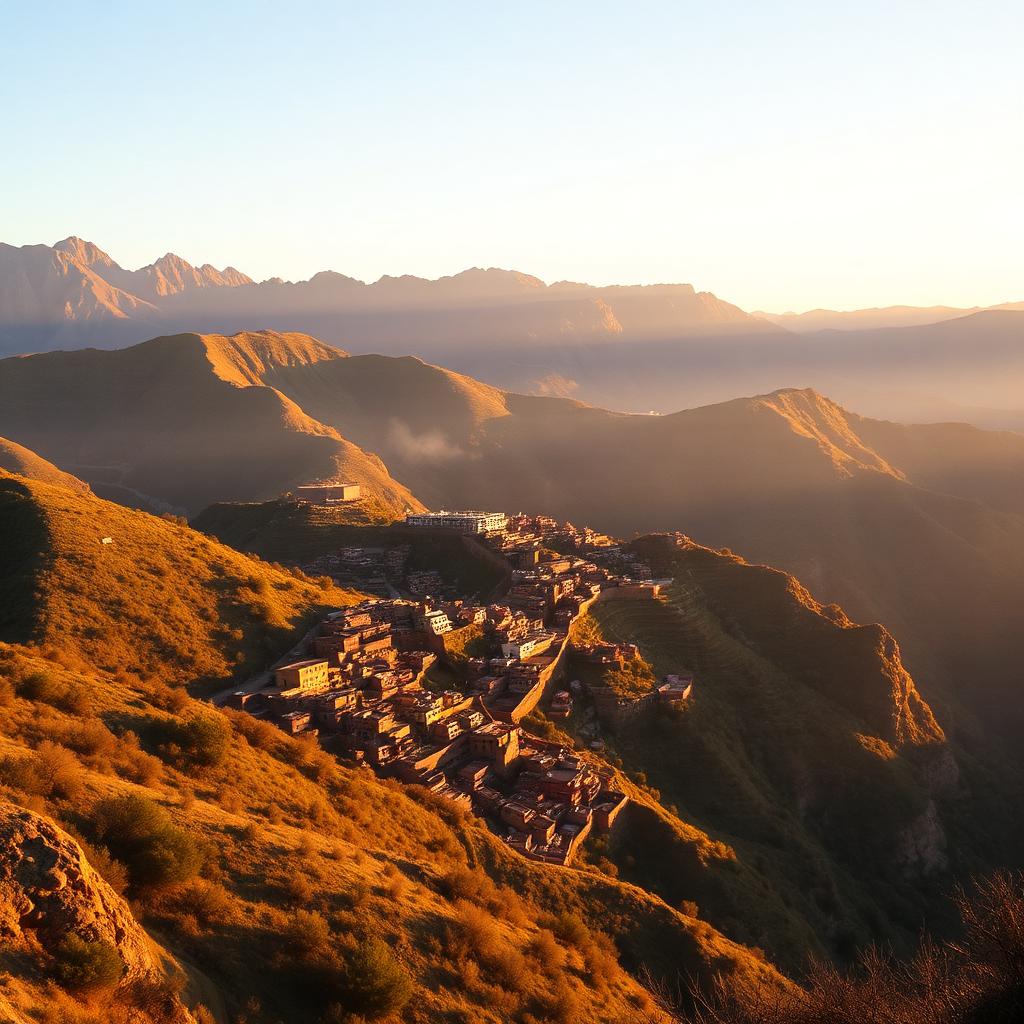
Illustration created for DZ Odyssey. Not a historical photograph.
ⵣ · The land
Where this region stands
A mountainous block in northern Algeria, between the Djurdjura range and the Mediterranean, villages perched, valleys deep, light sharp.
Museum data card · Kabylie
- Focus
- Amazigh identity & culture
- Connected eras
- 3
- Notable figures
- 8
- Cultural pillars
- 5
Home to the Kabyle Amazigh people and the Tamazight language.
ⵣ · Cultural meaning
What this place carries
Heart of the Tamazight language and of a poetic, musical, deeply oral culture that has shaped how the whole country speaks of memory.
ⵣ · Historical significance
Why historians return here
From Lalla Fatma N'Soumer's resistance to the 1956 Soummam Congress and the 1980 Berber Spring, Kabylie has been a workshop of Algerian conscience.
ⵣ · Key facts
What the record shows
Home to the Kabyle Amazigh people and the Tamazight language.
Site of the 1956 Soummam Congress, which organised the independence struggle.
In 1980, Tafsut Imazighen (Berber Spring) defended Amazigh language and identity.
Tamazight was recognized as a national language in 2002 and became an official language of Algeria in 2016.
Famous for poetry, song and a strong oral tradition.
Lalla Fatma N'Soumer led mountain resistance against French troops in the 1850s.
ⵣ · Cultural pillars
How the region expresses itself
01
Architecture
Stone houses with tiled roofs, fountains and djemaâs, villages built to face the mountain and each other.
02
Music
Idir, Aït Menguellet, Matoub, Kabyle song is poetry sung against forgetting.
03
Oral memory
Tales (timucuha), proverbs and women's poetry carry centuries of history without a single page.
04
Cuisine
Couscous, berkoukes, fresh herbs and olive oil, food of the mountain, made to gather generations.
05
Language
Tamazight was recognized as a national language in 2002 and became an official language of Algeria in 2016.
ⵣ · Connected stories
Notes from the curator's desk
01
The Soummam valley
In August 1956, in a remote Kabyle village, the FLN debated and wrote the platform that would frame independence.
Living heritage
Kabyle Jewelry: Silver, Color, and Memory
Kabyle jewelry is among the most recognizable artistic traditions of Algeria. With its vibrant colors, intricate forms, and remarkable silverwork, it carries the skill and memory of generations of artisans.
These pieces were never created merely as decoration. They formed part of traditional dress, expressed identity and belonging, accompanied important ceremonies, and represented heritage preserved within families.
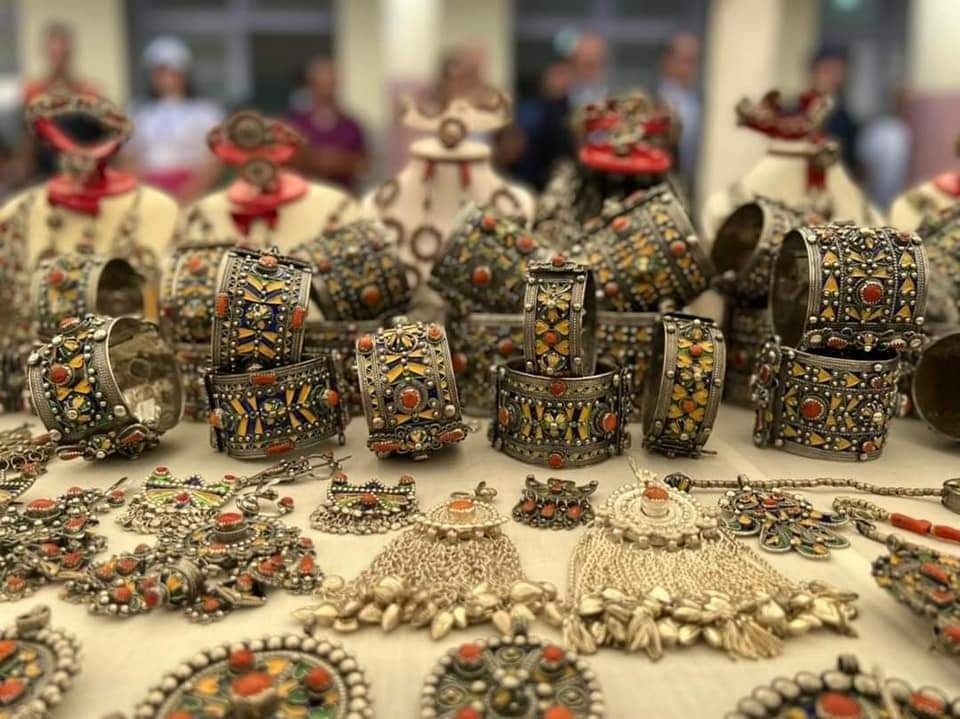
The Colors of Kabylie
Traditional Kabyle jewelry is fashioned principally from silver, sometimes strengthened with copper. Its distinctive brilliance comes from the contrast between the metal, Mediterranean red coral known locally as imeržan, and vividly colored enamel.
Blue, green, and yellow enamels are arranged within fine metal compartments using a technique known as cloisonné. Red does not traditionally come from enamel. It is introduced through pieces of coral set into the silver.
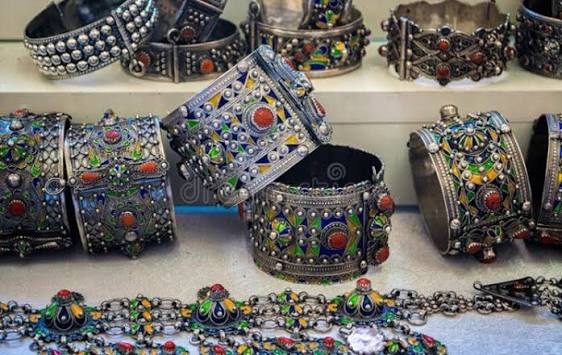
Silver provides the foundation. Enamel brings color. Coral gives the jewelry its unmistakable red.
Materials
- SilverThe structural metal, sometimes strengthened with copper.
- EnamelBlue, green, and yellow, set in fine compartments (cloisonné).
- Coral (imeržan)Mediterranean red coral set into the silver.
Jewelry with a Purpose
Every form had a place in traditional life. Fibulae known as ibzimen fastened draped garments and were often worn in pairs connected by a chain. The tabzimt, an elaborate pectoral decorated with enamel, silverwork, and coral, became one of the most important pieces of the Kabyle ensemble.
Bracelets, anklets, earrings, necklaces, rings, belts, and diadems completed the adornment. Some pieces were associated with weddings and family ceremonies, while others could preserve household wealth or be passed from one generation to the next.
Object labels
Traditional terminology as used in Kabylie.
- Ibzimen
- Silver fibulae traditionally used to fasten garments
- Tabzimt
- A prominent pectoral ornament decorated on both sides
- Timengucin
- Kabyle term for earrings; letrak are an older type of large hoop earrings.
- Azrar
- Necklaces composed of pendants
- Ta'essabt
- A ceremonial silver diadem associated with marriage
- Ikhelkhalen
- Large traditional anklets
The Artisans of Ath Yenni
The villages of Ath Yenni, also known as Beni Yenni, became especially renowned for this tradition. Their artisans developed jewelry distinguished by fine silverwork, filigree, coral settings, and brilliant blue, green, and yellow enamels.
Knowledge of the craft was often transmitted within families. The tradition continues today, sustained by artisans who preserve established techniques while creating pieces for new generations.
More Than Ornament
Kabyle jewelry could be practical, ornamental, symbolic, familial, and economic at the same time. Its designs helped express community identity, its pieces enriched family heritage, and its silver could represent lasting value.
Today, Kabyle jewelry remains an enduring witness to the creativity of Kabylie and to the richness of Algeria's Amazigh cultural heritage.
Every piece carries more than silver and color. It carries memory.
Sources and further reading
The encyclopedia entry below served as the starting overview. The scholarly publications that follow are the underlying references.
- « Bijoux kabyles », Wikipédia, French edition
- Henriette Camps-Fabrer, « Bijoux », Encyclopédie berbère, 1991. DOI: 10.4000/encyclopedieberbere.1758
- Henriette Camps-Fabrer, Les Bijoux de grande Kabylie, 1970
- Myriam Donsimoni, Mohamed Kemmar and Cécile Perret, Les bijoutiers d'Ath-Yenni, 2010
- Leyla Belkaïd, Costumes d'Algérie, 2003
ⵣ · Curator's reflection
A closing word
The mountain remembers what the city forgets.
ⵣ · Notable figures
Lives shaped by this region
Curator's note
The Curator recommends
Three exhibits chosen for you, based on what you just explored.
Continue Exploring
Provenance & Sources
Traceable citations, curator notes and further reading.
Widely Accepted
Provenance & Sources
Traceable citations, curator notes and further reading.
Academic References
- OpenEditionGabriel Camps (dir.) · Édisud / OpenEdition
- BlackwellThe BerbersMichael Brett & Elizabeth Fentress · Blackwell (Peoples of Africa series) · 1996
Digital Archives
- Journal officiel de la République algérienneBasis for the two milestones cited on this page: Tamazight recognized as a national language by the 2002 constitutional revision, then as an official language by the 2016 revision.
Further Reading
- The Berbers and the Islamic StateMaya Shatzmiller · Markus Wiener · 2000