Algeria, Century by Century
Three thousand years of kingdoms, invasions, resistance, ideas and rebirth, told as one continuous story.
Move through the centuries and discover how each Algeria shaped the one that followed.
Early North Africa
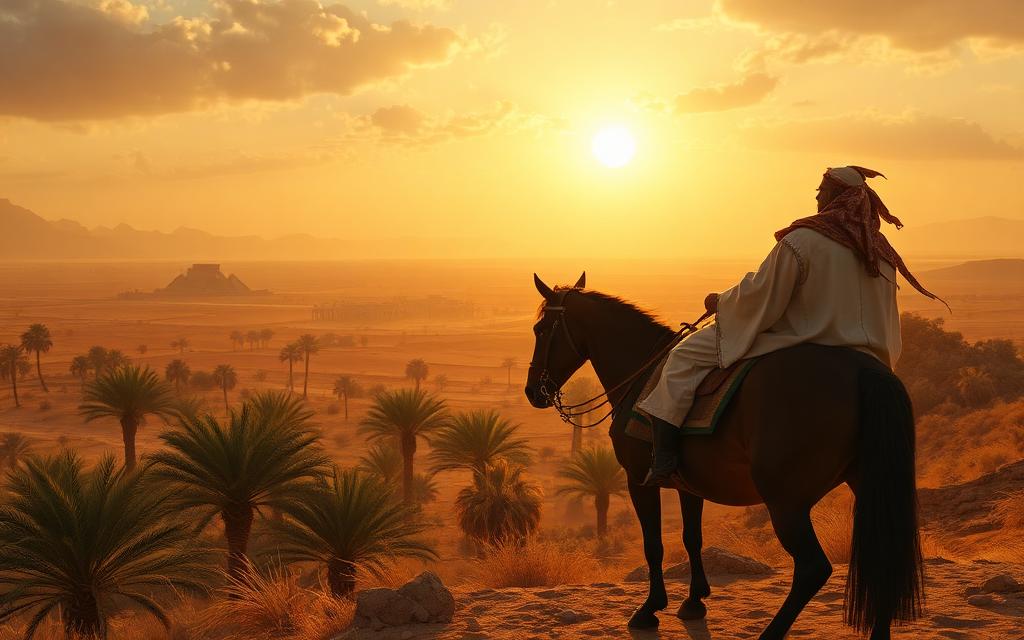
Before Numidia and modern borders, North Africa was already part of powerful civilizations. Leaders of Amazigh origin rose to prominence, including Sheshonq I, who ruled Egypt as a pharaoh and showed the deep roots of North African influence in the ancient world.
Long before Algeria carried a name on any map, its highlands, coast and desert were held by Amazigh peoples who farmed, herded, traded and fought on their own terms. Rock art in the Sahara records a greener world, and the Mediterranean coast drew in Phoenician traders who founded Carthage and a chain of harbours along the shore.
Contact with Carthage brought new goods, new writing and new wars. Amazigh cavalry became decisive in Mediterranean conflicts, and the tribal confederations of the interior grew wealthy and organised enough to negotiate with the great powers of the age rather than simply serve them.
Enter the full exhibitDefining moments
- 945 BC
Sheshonq I rules Egypt
A leader of Amazigh origin founds Egypt's 22nd Dynasty, a sign of how far North African influence already reached.
- 814 BC
Founding of Carthage
Phoenician settlers establish a city whose trade and wars would shape the whole North African coast.
People of the era
- MassinissaAncient / Numidia
He is remembered as the founding king who turned Numidia into a unified state and gave North Africa one of its earliest organized political structures.
- SyphaxAncient / Numidia
His rivalry with Massinissa shaped the unification of Numidia and the outcome of the Second Punic War in North Africa.
Places of the era
As Carthage and Rome exhausted each other, the Amazigh confederations of the interior became the power that mattered. Out of that opening rose a kingdom with its own coinage, capital and ambitions.
Numidia
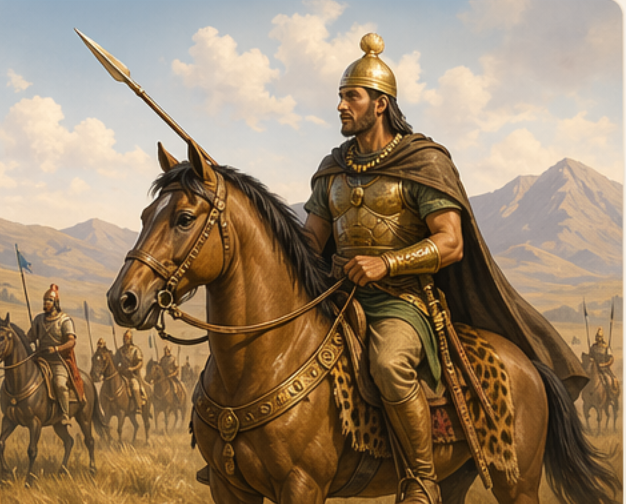
Centuries before Algeria had a name, Berber tribes galloped across its plains on swift horses. From this world rose Numidia, a proud kingdom of clever kings and feared cavalry that helped decide the fate of empires.
Numidia was the first Algerian state in the fullest sense: a unified kingdom with a capital at Cirta, a minted currency, an army and a foreign policy. Massinissa turned rival confederations into one realm and encouraged settled agriculture across the plains, which made the kingdom rich as well as feared.
That success placed Numidia between Rome and its own independence. Jugurtha's long war against Roman power showed both the depth of local resistance and the limits of a kingdom facing an empire that could afford to lose battles and still win the war.
Enter the full exhibitDefining moments
- 202 BC
Massinissa unites Numidia
Rival confederations are brought under one crown, creating a lasting North African kingdom.
- 112 BC
The Jugurthine War begins
Jugurtha resists Roman intervention for years and exposes deep corruption inside the Roman Senate.
- 46 BC
Numidia is annexed
After defeat in Rome's civil wars, the kingdom is absorbed into the Roman provincial system.
People of the era
- MassinissaAncient / Numidia
He is remembered as the founding king who turned Numidia into a unified state and gave North Africa one of its earliest organized political structures.
- JugurthaAncient / Numidia
Captured by betrayal but never broken in spirit, he became a lasting symbol of resistance to foreign domination in North Africa.
- SyphaxAncient / Numidia
His rivalry with Massinissa shaped the unification of Numidia and the outcome of the Second Punic War in North Africa.
- Juba IAncient / Numidia
His defeat marked the end of Numidian sovereignty and the absorption of much of Algeria into Rome's African province.
Places of the era
A kingdom gives way to imperial rule. Numidian cities remained, but the decisions that governed them were now taken in Rome.
Roman Algeria
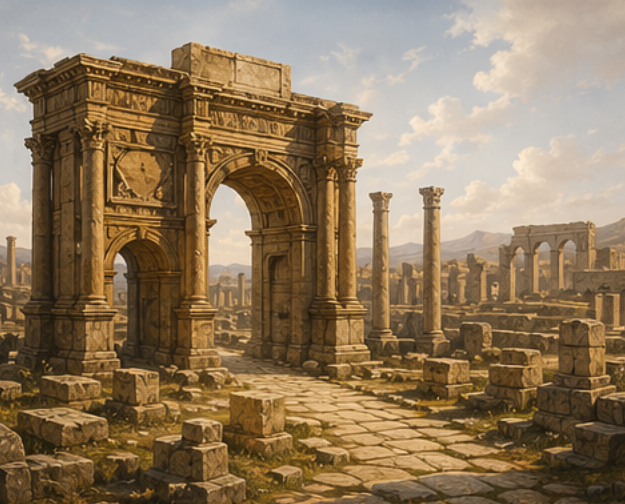
When Rome absorbed Numidia, golden wheat fields and silver olive groves turned the region into the empire's pantry. Marble cities like Timgad and Djemila rose from the plains, and a young man from Thagaste, Augustine, would one day reshape the Western mind.
Roman rule reorganised the land around cities, roads and grain. Timgad, Djemila and Tipasa were laid out with forums, theatres and baths, and the plains of eastern Algeria became one of the granaries of the empire. Local families entered Roman public life without ceasing to be North African.
This was also an age of ideas. Augustine of Hippo wrote from the Algerian coast works that still shape Western thought, while revolts such as that of Tacfarinas and later religious disputes showed that imperial order was never fully accepted. When the Vandals crossed into Africa, the province was already loosening.
Enter the full exhibitDefining moments
- AD 100
Timgad is founded
A planned colony in the Aurès becomes one of the best preserved Roman cities in the world.
- AD 354
Birth of Augustine of Hippo
Born at Thagaste, he becomes one of the most influential thinkers of late antiquity.
- AD 430
The Vandal conquest
Roman authority in North Africa collapses and the province passes to new rulers.
People of the era
- Augustine of HippoRoman / Late Antiquity
He is one of the most cited thinkers in the Western tradition and a reminder of the deep intellectual life of late Roman Algeria.
- Juba IIRoman / Late Antiquity
He represents an unusual mix of Numidian roots and Greco-Roman scholarship at the heart of Mediterranean culture.
- Septimius SeverusRoman / Late Antiquity
He shows how deeply North Africans were woven into the Roman elite at the empire's height.
- Apuleius of MadaurusRoman / Late Antiquity
He wrote The Golden Ass, the only Latin novel preserved in full, an early literary masterpiece from North Africa.
Places of the era
An empire fragments and new powers emerge. Within two centuries a different civilisation would arrive from the east, carrying a language, a faith and a new political map.
Early Islamic Algeria
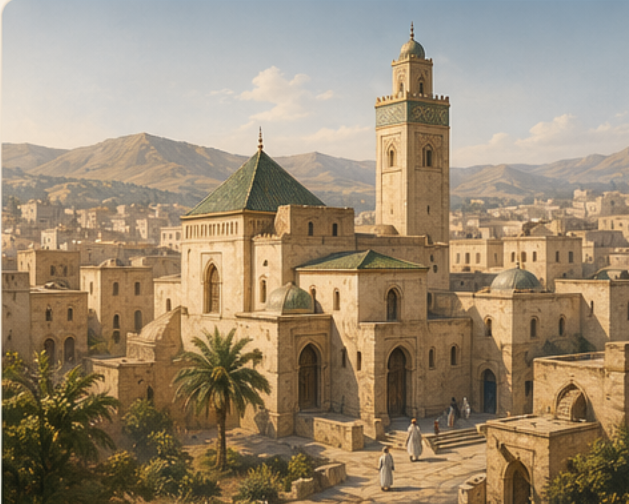
In the 7th century, Arab horsemen crossed the desert carrying a new faith. Islam met Berber spirit, sparked dynasties, and lit up cities like Tlemcen and Béjaïa, where scholars debated, traders bargained, and a young Italian named Fibonacci first met Arabic numerals.
The arrival of Islam changed language, law and learning across North Africa, and it met determined resistance before it was absorbed and made local. Dihya's stand in the Aurès belongs to that first century of encounter, and the memory of it survived in oral tradition long after the political outcome was settled.
What followed was not a single empire but a succession of North African dynasties, from the Rustamids of Tahert to the Fatimids, the Hammadids, the Almohads and the Zayyanids of Tlemcen. Cities became centres of scholarship and trade linking the Sahara to the Mediterranean, and thinkers such as Ibn Khaldun wrote history that is still read as method rather than chronicle.
Enter the full exhibitDefining moments
- AD 683
Dihya resists the Umayyads
An Amazigh queen leads the last major resistance to the eastern armies in the Aurès.
- AD 909
The Fatimid Caliphate rises
A dynasty founded in North Africa grows into a Mediterranean power centred later on Cairo.
- 1235
The Zayyanid kingdom of Tlemcen
Tlemcen becomes a capital of scholarship, craft and caravan trade for nearly three centuries.
People of the era
- Tariq ibn ZiyadEarly Islamic / Medieval
His landing in 711 began a centuries-long Muslim presence in the Iberian Peninsula.
- Ibn KhaldunIntellectuals & Culture
He is recognized worldwide as a founder of historical sociology and a major figure of Maghreb and Islamic intellectual heritage.
- Abd al-Rahman ibn RustamEarly Islamic / Medieval
His state is one of the earliest organized Muslim polities in the central Maghreb and a milestone of Algerian Berber Islamic history.
- Yaghmurasen Ibn ZyanEarly Islamic / Medieval
He gave western Algeria a long-lasting independent state and a rich cultural heritage centered on Tlemcen.
Places of the era
By the sixteenth century these kingdoms were weakened and Spanish fleets held positions on the coast. Appeals for help brought Ottoman power into Algiers, and with it a new form of state.
Ottoman Algeria
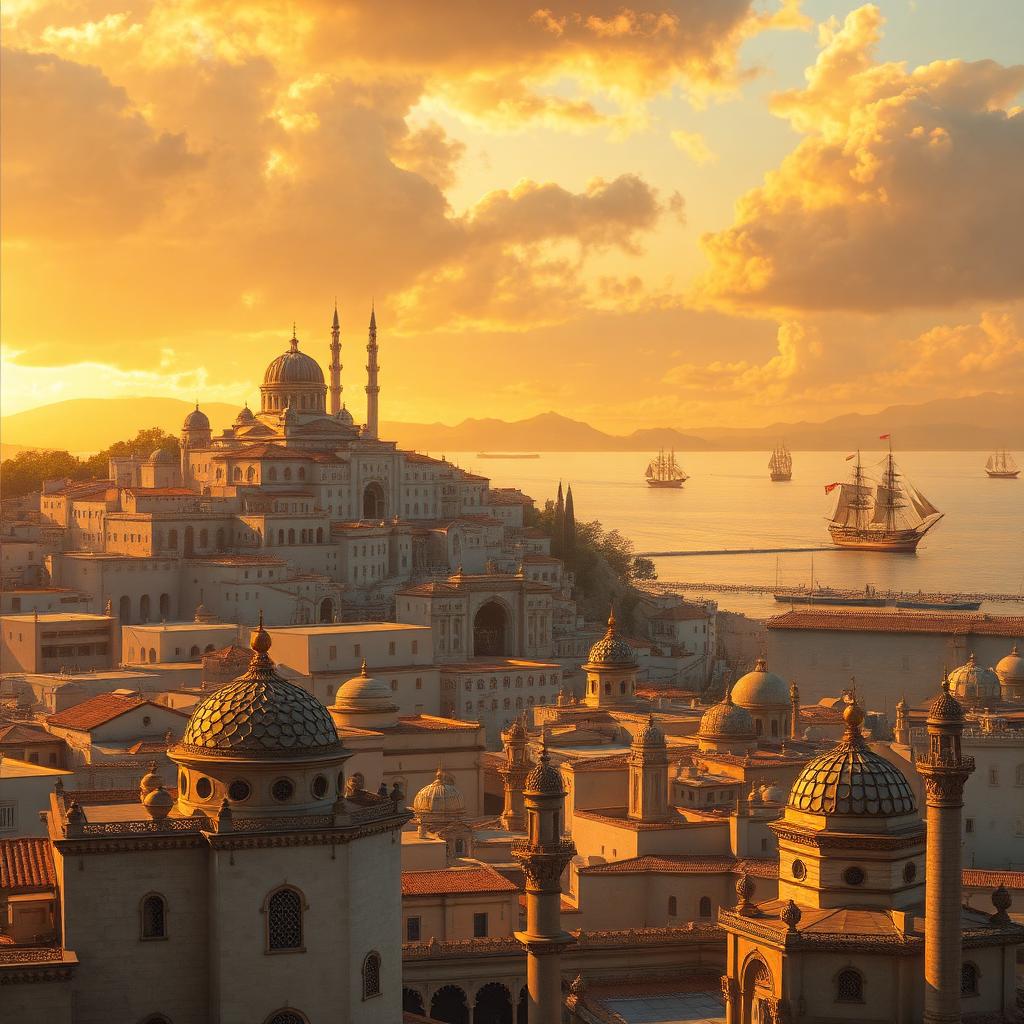
Ottoman Algeria was a powerful regency centered in Algiers. From the 16th century to 1830, it played an important role in Mediterranean politics, trade, and warfare. Local rulers, military elites, and Ottoman influence shaped the region long before French colonization began.
The Regency of Algiers was formally tied to the Ottoman sultan yet governed itself in practice. It kept a fleet, levied taxes, signed treaties with European states and defended a coastline that the great powers repeatedly tried to control. Algiers grew into a fortified maritime capital with its own institutions.
Power passed from the beylerbeys and pashas to the deys, elected by the ruling council. The Casbah, the corsair economy and the inland beyliks of Constantine, Titteri and Oran formed a working political order, but one that depended on naval strength at a moment when European navies were growing faster.
Enter the full exhibitDefining moments
- 1516
The Regency of Algiers is founded
Algiers becomes the capital of a state that will last three centuries.
- 1671
The age of the deys begins
Rule passes to leaders chosen locally, strengthening the Regency's practical independence.
People of the era
- Khayr ad-Din BarbarossaOttoman period
He founded the Regency of Algiers, a state that would last about three centuries before the French invasion.
- Raïs HamidouOttoman period
He embodies the late naval power of the Regency of Algiers and remains a popular hero of Algerian maritime memory.
- Hassan PachaOttoman period
He represents the resilience of the Regency's defenses against major European powers in its later phase.
- Salah RaisOttoman period
He extended the Regency of Algiers's reach from the Mediterranean coast deep into the Sahara.
Places of the era
A diplomatic quarrel over unpaid debts gave France the pretext it wanted. In 1830 a fleet appeared off the coast, and three centuries of Algerian self-rule ended.
French Colonization
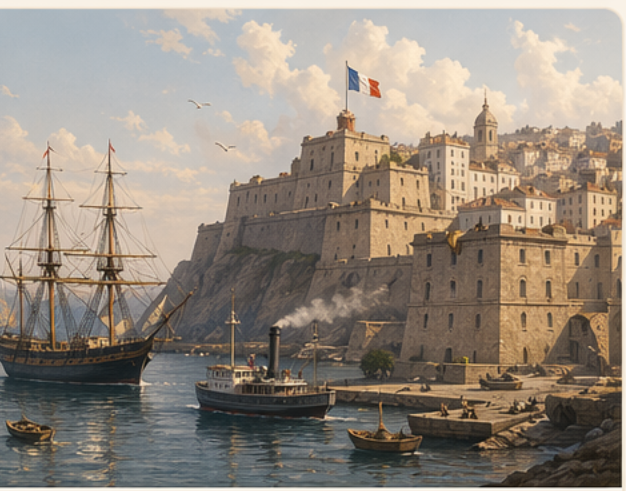
On a summer day in 1830, French ships appeared off Algiers and stayed for 132 years. Lands were taken, voices silenced, and yet resistance burned on, from Emir Abdelkader's desert campaigns to the mountain stand of Lalla Fatma N'Soumer.
Colonisation was not a single event but a long conquest. Land was confiscated, populations displaced and a legal order created in which the majority of Algerians were subjects rather than citizens. Emir Abdelkader built a state in resistance, Lalla Fatma N'Soumer led the mountains of Kabylie, and El Mokrani's revolt in 1871 was followed by heavy collective punishment.
In the twentieth century resistance changed form. Reformers such as Ben Badis worked on language, education and identity, while Messali Hadj built the first mass nationalist movement. Algerians fought in two world wars for a France that refused them equality, and the promises made in 1944 and 1945 were not kept.
Enter the full exhibitDefining moments
- 1830
The French invasion of Algiers
A French expedition takes Algiers and begins more than a century of colonial rule.
- 1847
Emir Abdelkader surrenders
After fifteen years of organised resistance and state building, the Emir accepts terms.
- 1857
Lalla Fatma N'Soumer is captured
The leader of the Kabyle mountain resistance is taken after years of holding the passes.
- 8 May 1945
Sétif, Guelma and Kherrata
Demonstrations for the promised independence are met with mass killings, and a generation loses faith in reform.
People of the era
- Emir AbdelkaderColonial resistance
He is remembered as a founder of the modern Algerian state idea and as a model of leadership combining faith, justice, and humanity, even toward prisoners of war.
- Lalla Fatma N'SoumerColonial resistance
She is celebrated as a national heroine and a powerful figure of Kabyle and women's resistance in 19th-century Algeria.
- Cheikh El MokraniColonial resistance
His revolt was one of the largest uprisings against French rule in the 19th century and a key reference point for later resistance movements.
- Abdelhamid Ben BadisIntellectuals & Culture
He gave colonial Algeria a clear cultural and religious identity, "Islam is my religion, Arabic my language, Algeria my homeland" and shaped generations of teachers and nationalists.
Places of the era
Colonial conquest created the conditions for resistance, and the repression of 1945 convinced many that political petitions had failed. Resistance became revolution.
War of Independence
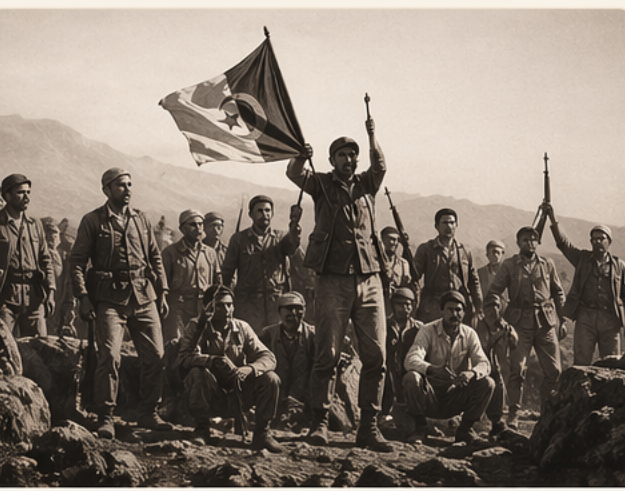
Just after midnight on November 1, 1954, gunfire echoed through the Aurès Mountains, the FLN had risen. Eight years of sacrifice followed, until on July 5, 1962, Algeria stood free at last.
On 1 November 1954 the FLN launched coordinated attacks and published a proclamation calling for an independent Algerian state. The war that followed was fought in the mountains, in the cities and in international assemblies, and it reached every family in the country.
The Soummam Congress of 1956 gave the revolution a political structure, the Battle of Algiers brought it to the world's attention, and women carried messages, weapons and wounded at enormous risk. The Evian Accords of 1962 ended the war, and on 5 July 1962 Algeria became independent.
Enter the full exhibitDefining moments
- 1 November 1954
Toussaint Rouge, the war begins
Coordinated attacks and the FLN proclamation open the War of Independence.
- 20 August 1956
The Soummam Congress
Meeting in Kabylie, the revolution gives itself a political programme and a command structure.
- 1957
The Battle of Algiers
Urban confrontation in the Casbah makes the Algerian cause impossible to ignore abroad.
- 5 July 1962
Independence of Algeria
After the Evian Accords and a referendum, Algeria recovers its sovereignty.
People of the era
- Abane RamdaneWar of Independence
He is remembered as the principal architect of the Soummam platform, which set the political foundations of the Algerian revolution.
- Larbi Ben M'hidiWar of Independence
He stands as a symbol of integrity, sacrifice, and the moral force of the Algerian revolution.
- Krim BelkacemWar of Independence
He is remembered as a key Soummam leader and as the principal Algerian signatory of the Évian Accords that recognized independence.
- Hassiba Ben BoualiWar of Independence
She became one of the most cherished figures of women in the urban revolution.
Places of the era
Independence answered the question of sovereignty and opened every other question: how to rebuild, how to remember, and what kind of country to become.
The chronicle is still being written.
Independence did not close Algeria's story. It opened a new chapter shaped by reconstruction, cultural memory, political change and the continuing question of what Algeria can become.
The years since have carried their own turning points, from the Berber Spring of 1980 to the October 1988 uprising and the Hirak popular movement of 2019.