
Frites-omelette
Baguette + fries + eggs. That is almost the entire story.
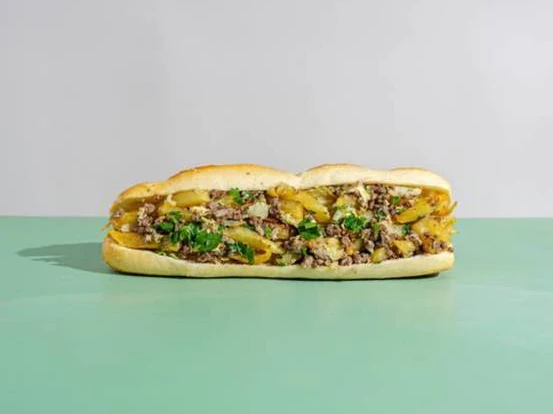
The classic Algerian frites-omelette is almost comically simple: a baguette filled with fries and eggs, often joined by harissa, mayonnaise or cheese. More elaborate versions may include minced meat or merguez and move toward what is commonly called a complet.
Its importance is not culinary sophistication. It is social history. The sandwich became popular because it was inexpensive, filling, quick to prepare and easy to carry. It fed workers between shifts, students between classes and schoolchildren on their way home.
Nobody ordered a frites-omelette for the elegant plating. You ordered it because you were hungry, in a hurry and had just enough money. Five minutes later, fries were escaping from the baguette, harissa was on your fingers, and lunch had done its job.
Its natural habitat: the gargote
The sandwich belongs to the small neighborhood counter. Fries can be prepared in quantity, eggs take only minutes, and the baguette turns everything into a portable meal. This was food organized around the pace of ordinary urban life, not formal dining.
Memory and diaspora
For many Algerians, the memory is larger than the ingredients: the smell of frying potatoes, the neighborhood shop, lunch after school, and perhaps a cold bottle of gazouz. In the diaspora, the same simple sandwich can bring Algeria back in a single bite.
Working-class food that became cultural memory.
There is no securely documented inventor, first restaurant or exact creation date for the Algerian frites-omelette sandwich. Available reporting points to modern popularization, with some accounts connecting its wider consumption to the growth of industrial egg production in the early 2000s. This should be presented as a historical reconstruction, not a settled origin story.